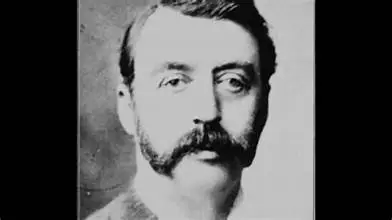
The murder of George Harry Storrs occurred on 1 November 1909 in Stalybridge, Cheshire, England. Despite two trials, no one was convicted of the crime.
Storrs had been receiving anonymous threatening letters following the suicide of his former lover. He was placed under police protection but was found stabbed to death within his residence. There were at least six known suspects in the murder, but no motive for the murder could be established. The description of an unnamed suspect seen by Storrs’ cook did not match either of the two men who were placed on trial.
In 2010, a historian connected this murder to the murder of Hannah Etchells, which took place months after Storrs’ murder.
Background
George was the third son of William Storrs,[1][2][3][4] a very successful builder[5] in Stalybridge, Cheshire. George inherited control of William’s business. George lived at Gorse Hall in Stalybridge, with his wife, Maggie (née Middleton). They had married when he was 30 and she was 35. To the public, the marriage appeared loveless and childless, unlike that of George’s older brother James, and it is possible that this was a cause of friction between the two brothers. However, there was solid evidence of Maggie and George sharing a deep love for each other, as witnessed by their niece, Marion Lindley.
Another brother William Henry had died in 1903. Cornelius Howard, a cousin of George Harry Storrs, was originally a petty thief but joined the British Army and rose to the rank of Bombardier. Cornelius was not liked by George. When Cornelius approached George for a position in the company, George refused.
Extramarital affair
George’s friend Robert Innes, a local solicitor, employed a governess for his children and George allegedly began a relationship with the young woman, Maria Hohl. Maria suddenly decided to leave Stalybridge, purportedly to attend Oxford University. She then returned, equally as suddenly, some eight months later but did not see George again. Goodman[6] wrote that Maria gave birth to a child during her absence from Stalybridge. After her return to Stalybridge, Maria Hohl committed suicide by drowning herself in a canal.
Robert Innes was a distant relation to George Harry Storrs through marriage. Robert Innes’ first wife was Eliza Storrs and they had a daughter Eliza Storrs Innes. Eliza’s father, John Storrs, was involved in the management of Taylor, Lang & Co the major textile engineering company in the town. He and his cousin William, George Harry’s father, lived next door to each other in Mottram Road, Stalybridge.[7][2]
Threats preceding the murder
After Maria’s death, George started receiving anonymous threatening letters. Following her death, he may have felt that he had a debt to pay, and thus feared a reason that he could be killed. This meant he could only really confide in his faithful servant, James Worrell.
Shortly afterwards, Gorse Hall was attacked twice. The first attack, according to author Jonathan Goodman, was staged (Goodman called it a burlesque), so that the police would take the threats seriously. A gun barrel was thrust through a window. This was probably done by Worrell. The attack made the police start patrols of the ground and a bell was installed to summon help in times of danger. George tested the bell, causing a lot of goodwill for George to evaporate.
Murder
The second attack, on the evening of 1 November 1909, was the fatal one. After “testing” the bell, George was not told by the police that they were protecting election buildings. At the time, there were preparations for the January 1910 general election.[8]
This preoccupation of the police meant that help only arrived as he was dying. Maggie Storrs rang the bell for the second attack and refused to attend her husband’s side as he lay dying. Her refusal was speculated to be her possible avoidance of hearing a confession of infidelity from her dying husband. Despite this, Maggie was very visibly shaken by her husband’s murder and was reported to faint on several occasions.
Witnesses reported seeing an intruder with a gun, but Storrs was stabbed to death, with 15 stabs being noted on his body.[8]
Trials
There were two trials: the first for George’s cousin, Cornelius Howard, and the second for another local man, Mark Wilde. Wilde was brought to the attention of investigators after he had attacked a young courting couple. Both Howard and Wilde were defended by barrister[9] Edward Theophilus Nelson, a British Guianan who had graduated from St John’s College, Oxford, in 1902.[10] Both men were acquitted.
Credit by : Reddit.com