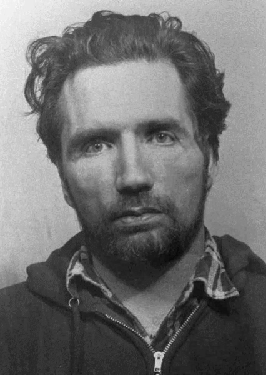
In the mid-1980s, Gary Michael Heidnik appeared to many people to be an unusual but financially successful man living in Philadelphia. Behind that outward image, however, was a history of violence, sexual abuse, psychiatric problems, and disturbing criminal behavior.
Between 1986 and 1987, Heidnik abducted six women and imprisoned them inside the basement of his North Philadelphia home. The women were subjected to rape, physical abuse, starvation, and other forms of torture. Two of the victims died.
The case eventually led to Heidnik’s conviction on multiple serious charges and a death sentence. More than a decade later, he was executed by lethal injection, becoming the last person executed by the Commonwealth of Pennsylvania.
A Troubled Childhood
Gary Michael Heidnik was born on November 22, 1943, in Eastlake, Ohio, near Cleveland. His parents, Michael and Ellen Heidnik, divorced when he was very young. Gary and his younger brother Terry spent several years living with an aunt before being placed with their father and his new wife.
As an adult, Heidnik described his childhood as abusive. He claimed that his father humiliated and physically mistreated him, including punishing him over his lifelong problem with bedwetting. Terry also later described their childhood as one involving frequent beatings. Their father denied the allegations.
At school, Gary was socially isolated. He reportedly avoided eye contact and had difficulty interacting with other students. He was also teased because of the unusual shape of his head, which he and his brother attributed to an accident when he was young.
Academically, however, he performed well. His reported IQ was 148.
His father eventually encouraged him to attend the Staunton Military Academy in Virginia. He remained there for about two years but left before graduating. After returning to public school, Heidnik eventually dropped out and joined the U.S. Army when he was 17.
Military Service and Mental Health Problems
Heidnik’s military career lasted only about 13 months.
During basic training, his drill sergeant reportedly rated his performance highly. He applied for specialist positions, including military police, but was not selected. Instead, he trained as a medic in San Antonio, Texas.
He later transferred to the 46th Army Surgical Hospital in Landstuhl, West Germany, where he obtained his GED.
In 1962, Heidnik began experiencing severe headaches, dizziness, blurred vision and nausea. A military neurologist initially diagnosed gastroenteritis while also noting signs of mental illness. He was prescribed psychiatric medication.
Later that year, he was transferred to a military hospital in Philadelphia. There, he was diagnosed with schizoid personality disorder and was eventually honorably discharged from the Army.
His problems did not end with his discharge.
He briefly attended the University of Pennsylvania and worked at a Veterans Administration hospital in Coatesville, Pennsylvania, but lost that job after problems involving attendance and his treatment of patients.
Over the following decades, Heidnik spent periods in psychiatric institutions and reportedly made numerous suicide attempts.
The Church and His Money
One of the more unusual parts of Heidnik’s life was his creation of a religious organization.
In 1971, he incorporated the United Church of the Ministers of God. It began with only a handful of followers, but Heidnik eventually developed significant financial assets through the organization and his investments.
By the mid-1980s, his Merrill Lynch brokerage account contained hundreds of thousands of dollars. The prosecution would later use his financial dealings as evidence that he understood his actions and was capable of making deliberate decisions.
His financial success created a striking contrast with the increasingly disturbing behavior taking place in his personal life.
A Marriage That Quickly Collapsed
Heidnik met Betty Disto through a matrimonial service. The two communicated by mail for approximately two years before she traveled from the Philippines to the United States.
They married in Maryland on October 3, 1985.
The relationship deteriorated rapidly.
Disto later accused Heidnik of sexual abuse, rape and assault. She also described being forced to watch him have sex with other women. In January 1986, she left him with assistance from members of Philadelphia’s Filipino community.
Unknown to Heidnik at the time, Disto had become pregnant during their short marriage. She later sought child support.
Heidnik also fathered children with other women. His daughter Maxine Davidson was born in 1978 and was placed in foster care shortly after birth. Another son, Gary Jr., was also placed in foster care.
His connection to Maxine would become significant many years later, when she and Disto challenged his competency to face execution.
Earlier Violence and Imprisonment
The crimes that eventually made Heidnik nationally notorious were not his first encounters with the law.
In 1976, he faced charges after allegedly shooting at a man who was renting one of his properties. The bullet reportedly grazed the man’s face.
Two years later, Heidnik committed an even more serious offense.
He signed out Alberta Davidson, the sister of his then-girlfriend Anjeanette, from a state hospital on day leave. Instead of returning her, he took her to his home and imprisoned her in a locked basement storage room.
After she was recovered, authorities determined that she had been sexually assaulted.
Heidnik was convicted of several offenses, including kidnapping, rape, unlawful restraint and false imprisonment. Although his original sentence was later overturned on appeal, he spent years in custody,
This story is based on publicly available information and reported facts. It has been independently written and presented for informational purposes. Images, if any, belong to their respective owners.