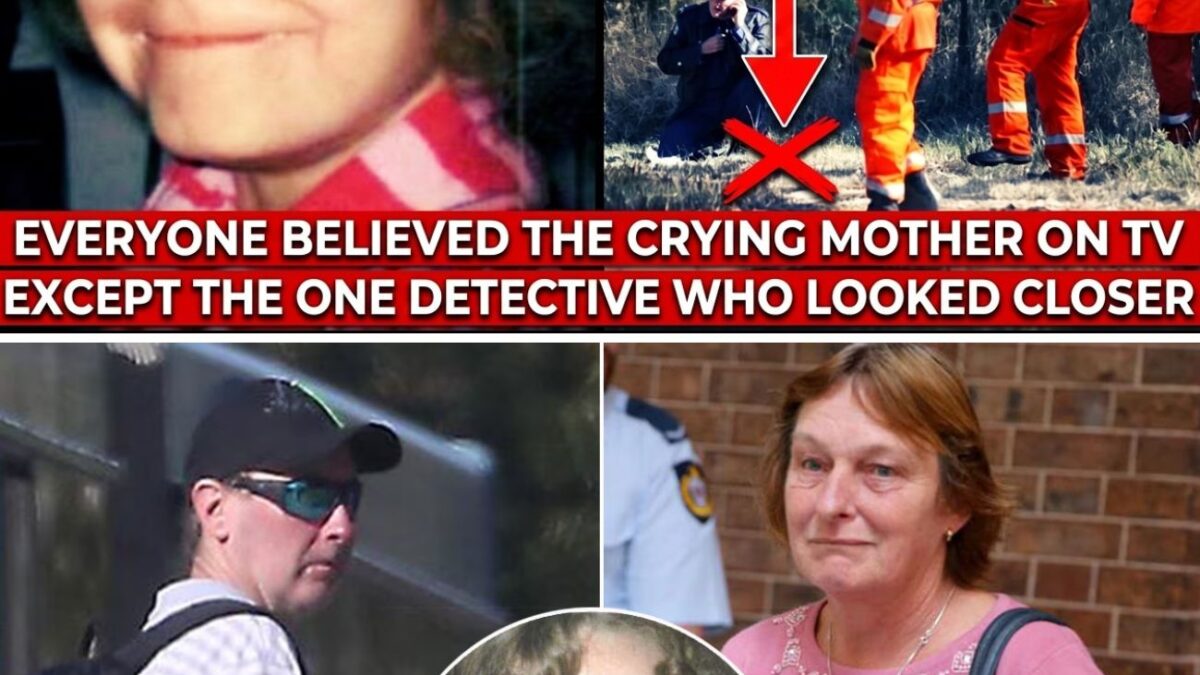
In August 2010, Australia was searching for a little girl.
Six-year-old Kiesha Weippeart had reportedly disappeared from her family home in Mount Druitt, in Sydney’s western suburbs. Within days, her face was everywhere. Police searched parks, bushland, creek beds, and drainage areas. Volunteers joined the effort, and people across the country watched the news hoping for the same outcome: that Kiesha would be found alive.
Her mother, Kristi Abrahams, appeared on television asking the public for help. Her stepfather, Robert Smith, appeared alongside her.
To everyone watching, they looked like two devastated parents desperate to bring a missing child home.
But behind the scenes, detectives were beginning to question the story.
The Search for a Missing Girl
The disappearance triggered a huge community response.
Volunteers spent their weekends searching areas around Mount Druitt. Police canvassed the neighborhood and followed up on possible sightings and information. Community groups organized fundraising efforts, while Kiesha’s photograph was circulated widely.
The family also made public appeals.
Abrahams spoke emotionally about her daughter, while Smith described Kiesha as a happy, funny, and beautiful little girl.
For months, the public believed they were watching a family desperately waiting for their child to return.
But investigators were becoming increasingly uncomfortable with parts of the story.
Certain details about the night Kiesha supposedly disappeared did not remain consistent. Phone records and movements raised additional questions, and detectives began examining the possibility that they were not dealing with a stranger-abduction case at all.
The answers might be much closer to home.
What Really Happened to Kiesha?
The investigation eventually uncovered a devastating timeline.
According to the source account, Kiesha had actually died on July 13, 2010, weeks before her disappearance was reported.
She had suffered a serious head injury inside the family’s Mount Druitt home. Investigators determined that Abrahams had inflicted the injury, while Smith had been present and failed to obtain medical assistance.
The autopsy revealed evidence that the final injury was not an isolated incident. Kiesha had suffered multiple injuries to her head, jaw, and body, including fractured teeth. The findings indicated a history of physical abuse rather than a single unexplained event.
For the public, this changed everything.
The child they had been searching for was not missing at all.
She had already been dead for weeks.
A Body Hidden and a Story Created
After Kiesha’s death, her body was kept inside the family home for several days.
Eventually, Smith carried her remains into bushland. According to the source account, her body was burned before being buried in a shallow grave.
Other items that might have connected the adults to the crime were also discarded or destroyed.
Only after this did Abrahams report Kiesha missing.
The search that followed was enormous. Volunteers who believed they were helping locate a living child were unknowingly searching for the remains of a girl who had already been dead for weeks.
Meanwhile, the two adults at the center of the investigation continued presenting themselves publicly as grieving parents.
For months, the deception held.
The Undercover Conversation
The breakthrough did not come from a dramatic forensic discovery.
Instead, investigators used an undercover operation.
A police officer established contact with Abrahams while concealing his connection to the investigation. Over time, she began revealing information about what had happened.
Eventually, she admitted that she had struck Kiesha.
According to the source account, Abrahams said the incident began because the six-year-old would not put on her pajamas.
It was a horrifyingly ordinary detail at the center of an extraordinary case.
A child had died, her body had been concealed, and an enormous nationwide search had followed—all while the truth remained hidden inside the family.
The conversation gave investigators the information they needed to move forward.
The Case Reaches Court
Kristi Abrahams and Robert Smith were eventually arrested and charged.
Abrahams pleaded guilty to killing her daughter. The court found that there was insufficient evidence to establish that she had specifically intended to kill Kiesha, although she had intended to cause grievous bodily harm. That distinction affected the legal outcome of the case.
In 2013, Abrahams received a maximum sentence of approximately 22 and a half years, with a 16-year non-parole period.
Smith pleaded guilty to manslaughter and to helping conceal Kiesha’s body. He received a separate sentence with a maximum term of 16 years.
The sentences provoked an angry reaction from members of the public who believed the punishment did not adequately reflect the seriousness of what had happened to Kiesha.
Smith was granted parole in 2023 after serving part of his sentence.
Abrahams remains imprisoned according to the source account.
The Child Behind the Headlines
It is easy for a case like this to become defined by the deception—the televised appeals, the enormous search, and the eventual arrest.
But before Kiesha became the center of a national investigation, she was simply a six-year-old girl.
She should have been growing up, going to school, playing, laughing, and experiencing an ordinary childhood.
Instead, her death was followed by months of deception that convinced thousands of people they were searching for a child who was still alive.
Volunteers gave their time. Strangers donated money. Police officers spent countless hours searching for answers. The public watched the appeals and hoped for good news.
All the while, the truth had already been hidden.
A Case That Shocked Australia
The case of Kiesha Weippeart remains disturbing not only because of the abuse that preceded her death, but because of what happened afterward.
For nine months, the public believed Kiesha was missing.
The people closest to her had created a story that made the world believe she might still be somewhere waiting to be found.
In the end, it was not a stranger who provided the answer.
It was an undercover investigation and a conversation that eventually exposed what had happened inside the family home.
Kiesha was six years old when her life ended.
Her name became known across Australia because people believed they were searching for her.
The tragedy is that by the time that search began, she was already gone.