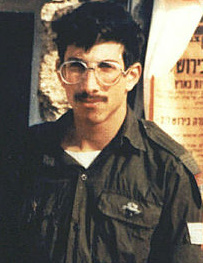
For nearly 37 years, the family of Zechariah “Zachary” Baumel lived with one painful question What happened to him?
Baumel was an American-born Israeli soldier serving in the Israel Defense Forces when he disappeared during one of the most chaotic battles of the 1982 Lebanon War.
On the night of June 10–11, 1982, Israeli forces fought the Battle of Sultan Yacoub in Lebanon. During the fighting, Baumel and several other Israeli soldiers vanished.
Some of the missing soldiers were eventually found alive or their remains were recovered.
Baumel was not.
For decades, rumors circulated that he might still be alive. His father, Yona Baumel, refused to accept that his son had simply disappeared into history. He spent years traveling, meeting witnesses, following leads and publicly pressuring authorities to continue searching.
Then, in 2019, after almost four decades of uncertainty, the mystery finally reached its conclusion.
From Brooklyn to Israel
Zechariah Baumel was born on November 17, 1960, in Brooklyn, New York.
He was the youngest of three children born to Yona and Miriam Baumel.
As a child, he attended the Hebrew Institute of Boro Park. In 1970, his family moved from the United States to Israel and settled in Kiryat Motzkin, near Haifa.
Baumel attended a religious state school before continuing his education at Midreshiat No’am High School in Pardes Hanna.
After graduating, he entered the hesder program at Yeshivat Har Etzion. The program combined religious studies with military service.
Eventually, Baumel became a tank commander in the Israel Defense Forces.
His military service would ultimately place him at the center of a mystery that lasted decades.
The Battle of Sultan Yacoub
In June 1982, Israel invaded Lebanon during the Lebanon War.
Baumel was serving with the IDF’s 362nd Battalion when his unit became involved in the Battle of Sultan Yacoub.
He was part of a tank crew that included gunner Arik Lieberman, communications operator Zvi Feldman and commander Hezi Shai.
During the night of June 10–11, their tank was hit.
The crew abandoned the damaged vehicle as the battle continued around them.
When the fighting ended, Baumel, Lieberman, Feldman and Shai were among the soldiers reported missing. Two additional soldiers from another tank were also unaccounted for.
Nobody knew exactly what had happened to them.
Conflicting Reports
Not long after the battle, reports began appearing in international media.
Western journalists, including reporters from Time, the Associated Press and La Stampa, reported that three Israeli soldiers and their tank had reportedly been displayed during a victory procession in Damascus.
Syrian media also reported the event.
But the available photographs were too unclear to determine whether Baumel or the other missing soldiers were actually among those shown.
The uncertainty only added to the mystery.
Syria later announced that several bodies had been buried in a Jewish cemetery.
When the International Committee of the Red Cross examined the graves in 1983, however, only one Israeli soldier believed to have been missing from Sultan Yacoub was recovered. The other remains were identified as three Arabs.
The fate of Baumel and the other missing soldiers remained unknown.
Two Soldiers Return
Some of the missing men eventually came home.
Arik Lieberman had been captured and taken to Syria. He was released during a prisoner exchange on June 23, 1984.
Hezi Shai had also been captured. He was held by the Popular Front for the Liberation of Palestine – General Command and eventually returned to Israel in a prisoner exchange in 1985.
But Baumel, Zvi Feldman and Yehuda Katz were still missing.
Israeli intelligence eventually concluded that the three men had probably died during the battle and that their bodies had initially been buried somewhere in Lebanon.
Investigators believed the remains may later have been transferred to the Martyrs’ Cemetery in the Yarmouk refugee camp near Damascus.
But there was no body to prove the theory.
A Father’s Search
Yona Baumel never stopped looking for his son.
For decades, he traveled internationally, spoke with witnesses and followed reports that Zechariah might still be alive.
He reportedly interviewed hundreds of people while attempting to separate genuine information from rumors.
Even years after Zechariah’s disappearance, people continued telling the family that they had seen him.
In 2005, Yona met individuals in Syria who claimed they had visited his son that same year.
There was no reliable evidence confirming those claims.
Before the Oslo Accords were signed in 1993, Yasser Arafat handed Israeli officials half of Baumel’s military identification tag and said he possessed additional information about his whereabouts.
That information was never fully revealed.
Israeli intelligence believed the tag may have been removed from Baumel’s body by a Palestinian doctor who had helped with the burial of soldiers after the battle.
For Yona Baumel, however, the unanswered questions remained.
Fighting to Keep the Case Alive
Yona became one of the most visible advocates for the missing soldiers.
He participated in demonstrations, joined protests and even went on a brief hunger strike.
He openly criticized Israeli military authorities, arguing that more should have been done to locate the missing men.
In 2003, he challenged the IDF’s decision to officially declare his son dead.
Yona and other families of missing Israeli soldiers eventually created their own organization, the International Coalition for Missing Israeli Soldiers, to pursue information that they believed authorities were not adequately following.
Their campaign also reached the United States.
In 1999, President Bill Clinton signed legislation known as “A Bill to Locate and Secure the Release of Zachary Baumel, an American Citizen and Other Israelis Missing in Action.”
The law directed the U.S. State Department to raise the issue with Middle Eastern governments and encouraged cooperation in efforts to locate missing Israeli soldiers.
A Lawsuit Against Syria
The Baumel family also pursued legal action.
In 2006, members of the family filed a lawsuit in a U.S. federal court against the Syrian government and senior Syrian officials.
The lawsuit accused Syria of abducting and unlawfully holding Zechariah Baumel.
But despite years of pressure, investigation and international attention, there was still no definitive answer.
Then everything changed.
The Search That Finally Succeeded
In 2017, Israel and Russia began cooperating on an operation intended to locate the remains of missing Israeli soldiers believed to have been buried in Syrian territory.
The operation was eventually known as Operation Bittersweet Song, or Zemer Noogge, a name taken from a poem by Israeli poet Rachel Bluwstein.
Russian and Syrian forces searched areas around the former Yarmouk refugee camp, including the old Martyrs’ Cemetery.
The operation reportedly involved examining large numbers of graves and recovering remains for identification.
Then investigators found something extraordinary.
A body was discovered wearing an Israeli military uniform.
The uniform and military boots reportedly carried the name “Baumel.”
The remains were transported for forensic examination, and DNA samples were sent to Israel.
Testing at the Abu Kabir Forensic Institute confirmed what Baumel’s family had waited nearly four decades to hear:
The remains belonged to Zechariah Baumel.
The News That Ended a 37-Year Wait
On April 3, 2019, Russian President Vladimir Putin publicly announced that Baumel’s remains had been located.
Israeli Prime Minister Benjamin Netanyahu traveled to Moscow, where he received the remains during an official ceremony at Russia’s defense ministry.
He was also presented with Baumel’s recovered military uniform and boots.
After decades of uncertainty, the family finally had something they had been missing since 1982:
proof of what had happened to Zechariah.
His Final Journey Home
On April 4, 2019, Zechariah Baumel was buried at the Mount Herzl military cemetery in Jerusalem.
Israeli leaders, family members and thousands of mourners attended the nighttime funeral.
The ceremony marked the end of one chapter of the case—but not the end of the search for the other missing soldiers.
The recovery of Baumel’s remains also renewed attention on Zvi Feldman and Yehuda Katz, whose whereabouts had remained unresolved.
The Mystery Continues
For decades, the three soldiers—Baumel, Feldman and Katz—had become symbols of the unresolved losses from Sultan Yacoub.
Baumel’s remains were finally recovered in 2019.
Feldman’s remains were later recovered during a Mossad operation in May 2025.
Katz’s remains were recovered in August 2026.
The discoveries brought answers to families who had spent decades living with uncertainty.
A Son Who Was Never Forgotten
Zechariah Baumel was only 21 years old when he disappeared.
He had been born in Brooklyn, raised partly in Israel and was serving his country when his life was suddenly lost in the chaos of war.
For almost 37 years, his family did not know where he was buried.
His father refused to allow his son to become just another name on a list of missing soldiers.
He kept searching.
He kept asking questions.
He kept the case in the public eye.
And eventually, the search succeeded.
Zechariah Baumel finally came home—not alive, as some had hoped for many years, but with his identity and final resting place confirmed.
After nearly four decades, his family could finally visit his grave and know exactly where he was.
The soldier who disappeared in the chaos of Sultan Yacoub was finally no longer missing.
This story is based on publicly available information and reported facts. It has been independently written and presented for informational purposes. Images, if any, belong to their respective owners.